Popeye Toys (Linemar, Chein, Marx Tin) Value Guide
Lithographed tin Popeye toys made by Marx, J. Chein and Marx's Japanese Linemar division from the 1930s through the 1950s, valued on maker, mechanism, completeness and surviving litho and celluloid parts.
How we set the number
Every Popeye Toys (Linemar, Chein, Marx Tin) value we quote is anchored to actual eBay sold listings — the exact prices matching pieces closed at, in matching condition. Active asking prices are wish prices; an automated estimate is a shrug. We start from what people genuinely paid, then adjust for the specifics of your piece.
The era collectors care about: 1930s-1950s tin and tin-litho Popeye toys by Marx, Chein and Marx's Japanese Linemar division. These are the factors that separate a common piece from a genuine find — and the things to look at before you trust any number:
The maker and mechanism, since a boxed, working, battery-operated Linemar piece like the Popeye and Olive Oyl Tank commands a different market from a simple windup, and a mechanism that still performs its action in full matters a great deal
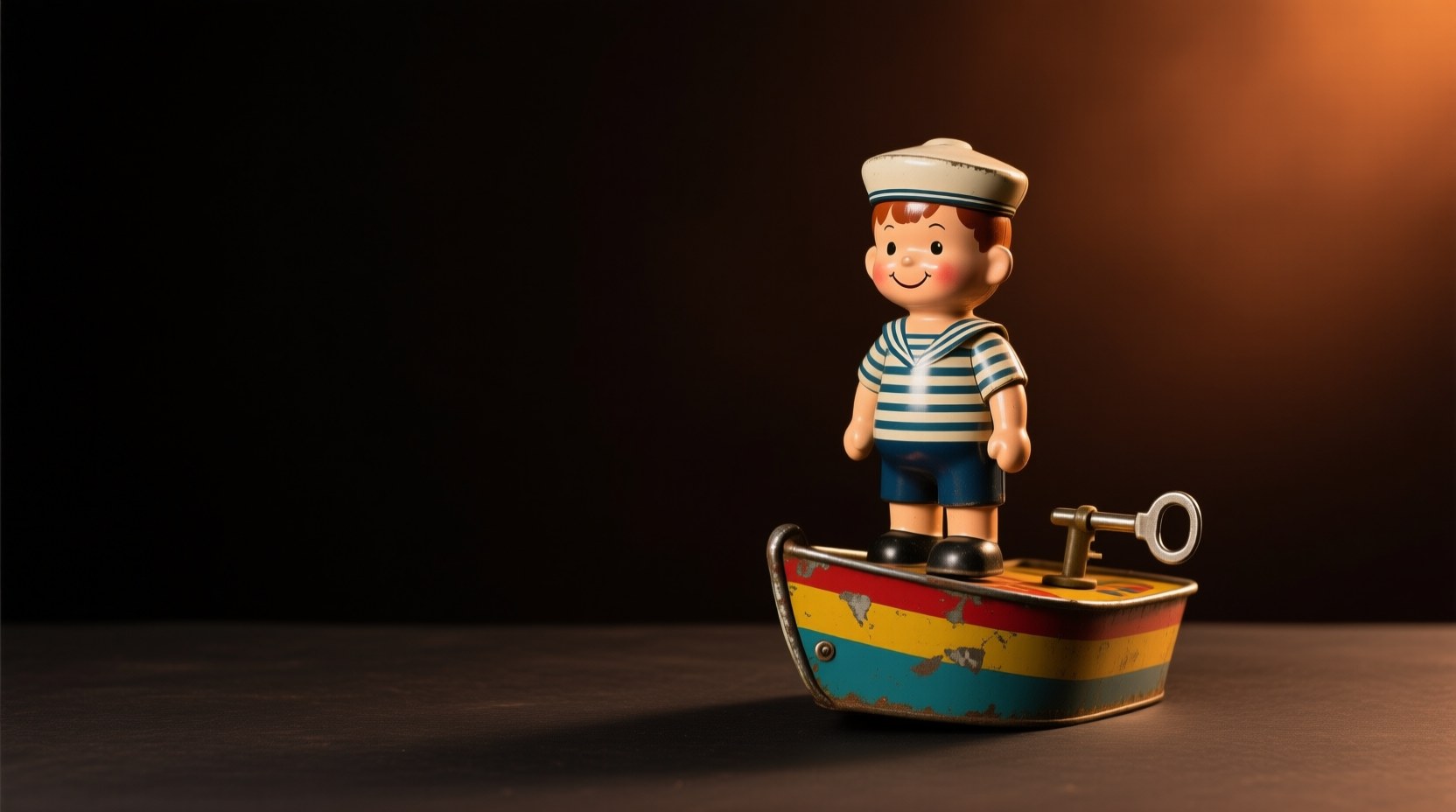
Completeness of small, easily lost parts, since many Popeye toys carried a pipe, a parrot, oars, a remote or a key, and a toy missing these original pieces is judged as incomplete even if it still runs
Condition of the tin lithography, because rust, flaking paint, dents and scratches to the printed image lower a toy that otherwise works, and bright, unfaded litho is worth protecting from damp and direct sun
The original box, since a crisp, fully illustrated pictorial box can add more to a toy's story than the toy alone, and a toy and box that are not a documented match are valued with more caution
Marks that match the maker and era, because a genuine Popeye toy can carry a King Features Syndicate copyright alongside the maker's name, and marks that do not agree with each other are worth questioning
Some of the Popeye Toys (Linemar, Chein, Marx Tin) pieces whose values come up most often — though every piece is worth identifying, because the value lives in the details:
The #1 mistake on Popeye Toys (Linemar, Chein, Marx Tin): pricing off a high active listing instead of a real sold one, and assuming condition is better than it is. A clean grade against the sold comps is the difference between a number that holds and a number that disappoints.
History
Popeye the Sailor, created by E.C. Segar, first appeared on January 17, 1929, in the King Features comic strip Thimble Theatre, which became one of King Features' most popular properties during the early 1930s. Louis Marx & Co. and J. Chein & Co. both made lithographed tin windup Popeye toys in the 1930s, including punching toys, the Popeye Express baggage cart with its parrot and the Popeye the Champ boxing ring with celluloid fighters. Linemar was founded in the 1950s as Marx's manufacturing and import subsidiary for mechanical and battery-operated toys made in Japan, and it produced Popeye toys such as a mechanical roller skater, a cyclist and the battery-operated Popeye and Olive Oyl Tank. Boxed and complete examples are the ones collectors look for.
Identify
Check the toy and box for a maker's mark, Linemar or Marx, together with a King Features Syndicate copyright for Popeye; period boxes and parts can carry it, such as a Chein puncher box marked 1932 King Features Syndicate.
Look at the lithography and the wear; bright, even litho and an intact box are good signs, while fading, rust and scratches are normal on played-with toys and should be photographed.
Examine the mechanism and small parts; a windup key, a pipe, a parrot, oars or a battery compartment should match the toy's design, and replaced or home-made parts are usually visible on close inspection.
Compare the toy against documented examples from auction houses and museum collections before assuming a rare variation; several Marx and Linemar Popeye toys exist in closely related versions with different accessories.
Check that the toy and its box belong together; a box can be paired with a different example of the same toy to improve its presentation, so compare box artwork, numbers and wear against the toy.
Replacement and repainted parts are a risk on played-with toys, including replaced pipes, parrots or bells and touched-up lithography; a professional repaint changes what the toy is even when it looks complete.
Reproduction tin toys can exist for any popular character; compare weight, tin thickness, printing sharpness and marks against documented originals before buying a toy with no history.
Grab the checklist to run a first pass yourself, then send your Popeye Toys (Linemar, Chein, Marx Tin) over for a free, no-obligation appraisal — researched by hand and priced against real sold comps.
The same hand-research walk-through we use on every Popeye Toys (Linemar, Chein, Marx Tin) piece - boiled down to a checklist you can run yourself. Stop guessing and start with a number you can actually defend.

Send photos and we’ll do the research — identify each Popeye Toys (Linemar, Chein, Marx Tin) piece, pull the matching sold comps, and give you an honest number with the receipts behind it. Free, and no obligation to sell.
By real eBay sold listings - the prices Popeye Toys (Linemar, Chein, Marx Tin) pieces in matching condition have actually closed at recently, not active asking prices and not an automated estimate. An asking price is a wish; a sold price is a receipt. We start every appraisal from the sold comps.
The maker and mechanism, since a boxed, working, battery-operated Linemar piece like the Popeye and Olive Oyl Tank commands a different market from a simple windup, and a mechanism that still performs its action in full matters a great deal. Completeness of small, easily lost parts, since many Popeye toys carried a pipe, a parrot, oars, a remote or a key, and a toy missing these original pieces is judged as incomplete even if it still runs. Two pieces that look identical to a casual buyer can sit at very different numbers once you account for these, which is exactly why a by-hand read beats a price-guide average.
Yes - more than almost anything else. Condition of the tin lithography, because rust, flaking paint, dents and scratches to the printed image lower a toy that otherwise works, and bright, unfaded litho is worth protecting from damp and direct sun. We grade against pristine, not against the last beat-up copy we saw, and when it's a close call we grade down. The honest grade is what keeps the number defensible.
Yes, and it's free with no obligation. Send photos and we'll identify each piece (1930s-1950s tin and tin-litho Popeye toys by Marx, Chein and Marx's Japanese Linemar division), pull the matching sold comps, and give you a number with the receipts behind it. Grab the appraisal checklist below to do a first pass yourself, or send it over and we'll do the research.
Some are, especially boxed, complete examples from Linemar, Marx or Chein with their original accessories and mechanisms intact. A boxed Linemar Popeye and Olive Oyl Tank set a world auction record for a Popeye toy in 2022. Photograph the maker's mark, the lithography, every accessory and the box if you have it, and send the full set of photographs so the toy can be identified and assessed properly.
Look for the maker's name stamped or printed on the toy or box. Linemar was Marx's Japanese subsidiary, founded in the 1950s for mechanical and battery-operated toys made in Japan, while Marx and Chein made tin windup Popeye toys in the 1930s. The King Features Syndicate copyright also helps place a piece.
Yes. Small accessories like Popeye's pipe or a toy's parrot were easily lost or broken and are part of what makes a toy complete; auction listings note the pipe is commonly missing. A missing accessory or box lowers a toy's standing even if the mechanism still works, but the toy can still be worth appraising, so photograph it exactly as it is and note anything you know is missing.
Looking at a different line? Browse all value guides.