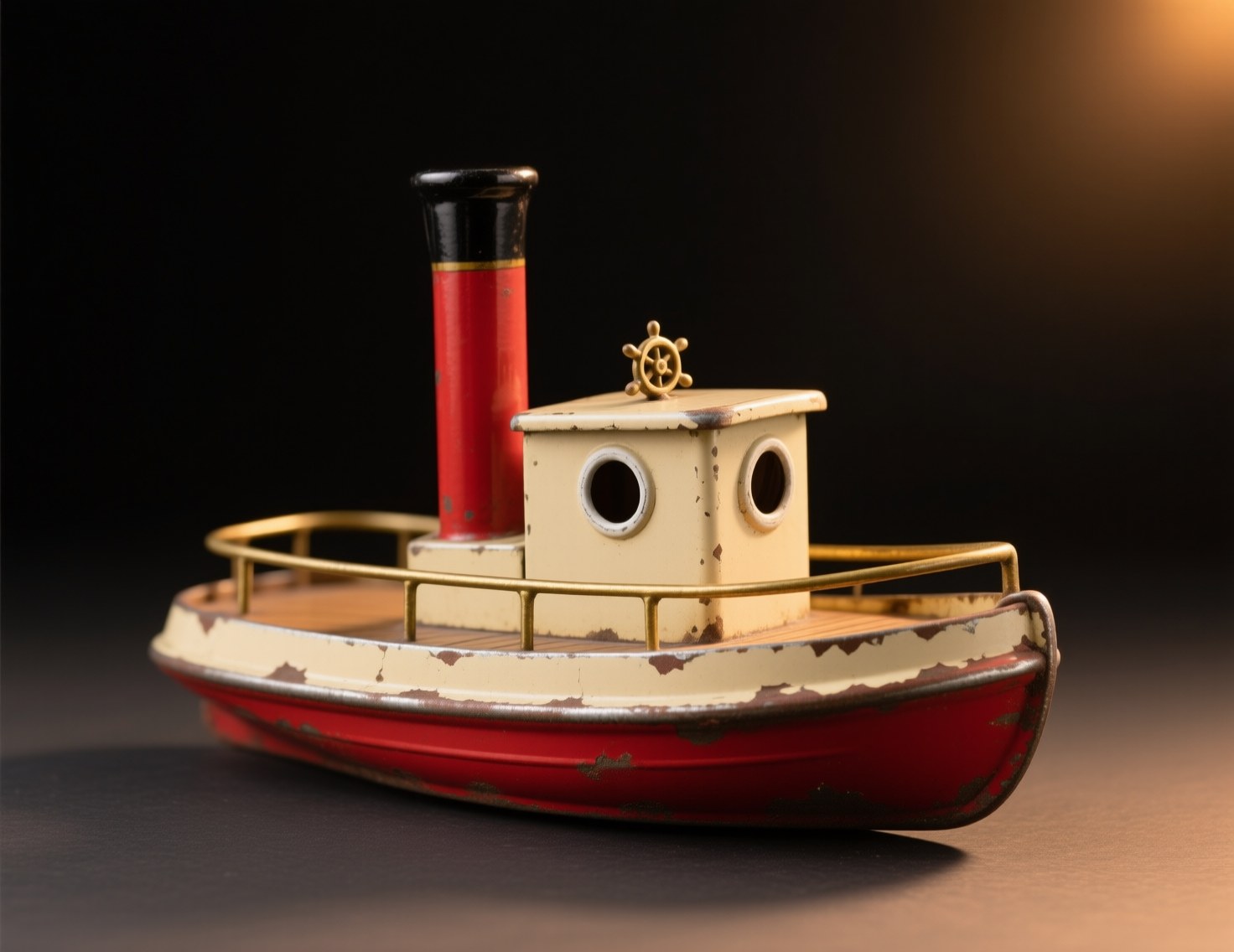
Märklin Toy Boats and Ocean Liners Value Guide
Märklin's hand-painted tinplate ships of about 1900 to 1930, from ocean liners and battleships to paddle steamers and torpedo boats, are valued on original paint, intact rigging, size, and which model and series they are.
How we set the number
Every Märklin Toy Boats and Ocean Liners value we quote is anchored to actual eBay sold listings — the exact prices matching pieces closed at, in matching condition. Active asking prices are wish prices; an automated estimate is a shrug. We start from what people genuinely paid, then adjust for the specifics of your piece.
The era collectors care about: 1900-1930, tinplate clockwork, spirit-fired and live-steam ships and boats from Göppingen, Germany. These are the factors that separate a common piece from a genuine find — and the things to look at before you trust any number:
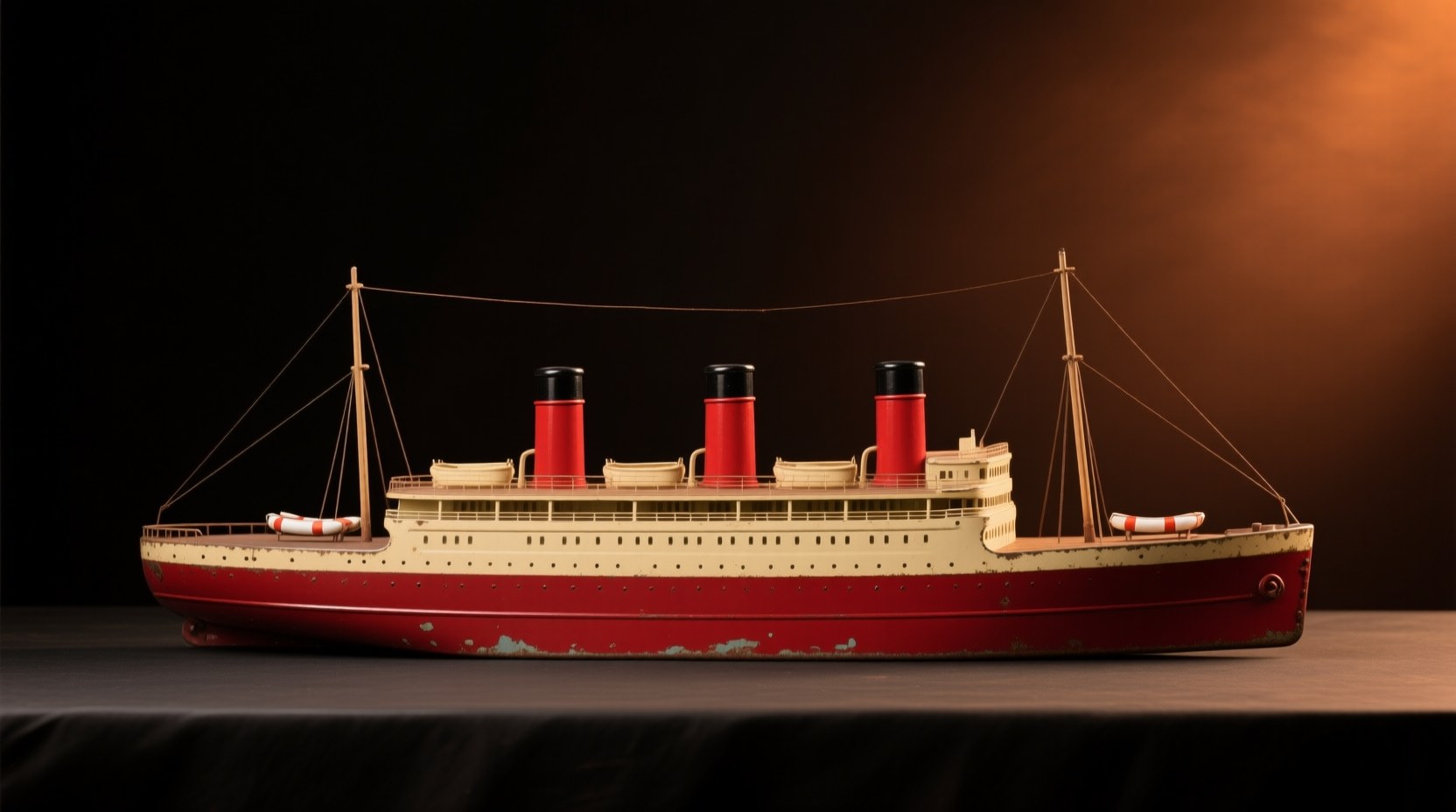
Original factory paint, because an unrestored boat with honest wear is judged very differently from one that has been repainted, and collectors look at the hull, deck and lifeboats closely
Intact masts, rails, funnels, flags and lifeboats, since these thin parts break or go missing, and even top boats are catalogued with any replaced pieces noted
The type and size of the model, because large, detailed ocean liners and battleships, often 30 inches or more in length, are catalogued separately from torpedo boats and paddle steamers, and each type has its own buyers
The model series and date, since auction houses catalogue boats as Series I or Series II, and the version and period affect which collectors want it
Power and mechanism, because clockwork, spirit-fired and live-steam boats are different pieces, and an original boiler, burner or spring is part of what a collector checks
Some of the Märklin Toy Boats and Ocean Liners pieces whose values come up most often — though every piece is worth identifying, because the value lives in the details:
The #1 mistake on Märklin Toy Boats and Ocean Liners: pricing off a high active listing instead of a real sold one, and assuming condition is better than it is. A clean grade against the sold comps is the difference between a number that holds and a number that disappoints.
History
Märklin was founded in Göppingen, Germany, in 1859 by Theodor Friedrich Wilhelm Märklin, and began as a maker of household goods. The firm later took over the Ludwig Lutz tinplate toy company in Ellwangen, which gave it the means to build mechanical toys such as boats and trains. Märklin went on to make ship models powered by clockwork, spirit-fired boilers or live steam, with hand-painted hulls, decks, lifeboats, masts and rigging. The subjects were the ships of the day: transatlantic ocean liners, warships, torpedo boats and paddle steamers. Auction houses sort the same ship into earlier and later series, with a battleship of about 1902 described as Series I and one of about 1912-15 described as Series II. During the First World War the firm was ordered to produce war goods. Collectors chase the boats that survive with their original paint and fittings, and the best of them now appear at specialist toy auctions, where catalogues describe condition piece by piece, including every replaced flag or mast. That scale, hand finish and mechanical detail is what sets Märklin ships apart.
Identify
Look for the maker's mark and any catalogue number, then compare them with Märklin catalogue references. Boats came in different types and sizes, so match yours to a documented model.
Check which series and period the boat belongs to. Auction houses date the Maine to about 1902 as Series I, and the Brooklyn to about 1912-15 as Series II, so hull style and size help place yours.
Identify the power source. Clockwork boats are key-wound, while live-steam boats have a boiler with a cap and steam valve, and some boats were spirit-fired. Note whether the boiler fittings look original.
Check masts, flags, pennants, lifeboats and rails for replacements. Even a very fine boat can be catalogued with a few small replacement parts, so look for different paint colour or a seam where a part was added.
Märklin itself made later reproductions. Its Jolanda propeller steamship, about 82 cm long, is a reproduction of a boat from around 1910 issued as a one-time series, so a boat of that kind needs checking against Märklin's own records.
Other firms have made reproductions. Selzer and Hehr, for example, have produced high quality Märklin reproductions, so have any boat checked by a specialist before it is treated as original.
Old tinplate gets restored. Ritter, for one, restores toy ships and trains, and collectors prefer pieces that are original and unrestored, so ask for a restorer's work to be disclosed.
Grab the checklist to run a first pass yourself, then send your Märklin Toy Boats and Ocean Liners over for a free, no-obligation appraisal — researched by hand and priced against real sold comps.
The same hand-research walk-through we use on every Märklin Toy Boats and Ocean Liners piece - boiled down to a checklist you can run yourself. Stop guessing and start with a number you can actually defend.

Send photos and we’ll do the research — identify each Märklin Toy Boats and Ocean Liners piece, pull the matching sold comps, and give you an honest number with the receipts behind it. Free, and no obligation to sell.
By real eBay sold listings - the prices Märklin Toy Boats and Ocean Liners pieces in matching condition have actually closed at recently, not active asking prices and not an automated estimate. An asking price is a wish; a sold price is a receipt. We start every appraisal from the sold comps.
Original factory paint, because an unrestored boat with honest wear is judged very differently from one that has been repainted, and collectors look at the hull, deck and lifeboats closely. Intact masts, rails, funnels, flags and lifeboats, since these thin parts break or go missing, and even top boats are catalogued with any replaced pieces noted. Two pieces that look identical to a casual buyer can sit at very different numbers once you account for these, which is exactly why a by-hand read beats a price-guide average.
Yes - more than almost anything else. The type and size of the model, because large, detailed ocean liners and battleships, often 30 inches or more in length, are catalogued separately from torpedo boats and paddle steamers, and each type has its own buyers. We grade against pristine, not against the last beat-up copy we saw, and when it's a close call we grade down. The honest grade is what keeps the number defensible.
Yes, and it's free with no obligation. Send photos and we'll identify each piece (1900-1930, tinplate clockwork, spirit-fired and live-steam ships and boats from Göppingen, Germany), pull the matching sold comps, and give you a number with the receipts behind it. Grab the appraisal checklist below to do a first pass yourself, or send it over and we'll do the research.
It can be, because Märklin's large hand-painted tinplate ships have set records at specialist auctions. A boat's value depends on its size, model, original paint and whether rigging and fittings are intact. A small or heavily damaged boat is a very different case from a complete liner, so it needs a by-hand appraisal.
Yes. Collectors prefer pieces that are original and unrestored, and auction catalogues list replaced flags, masts and other fittings even on top boats. A repaint or re-rig does not make a boat worthless, but it changes how the piece is valued, so tell us everything you know about its history.
No. Leave the paint, rigging and boiler exactly as they are. A boat found in an attic can be prized for its original paint, and well-meant touch-ups, cleaning with the wrong materials or replacing parts can remove what collectors value most. Photograph it as found, keep any broken pieces, and let a specialist advise on conservation.
Looking at a different line? Browse all value guides.