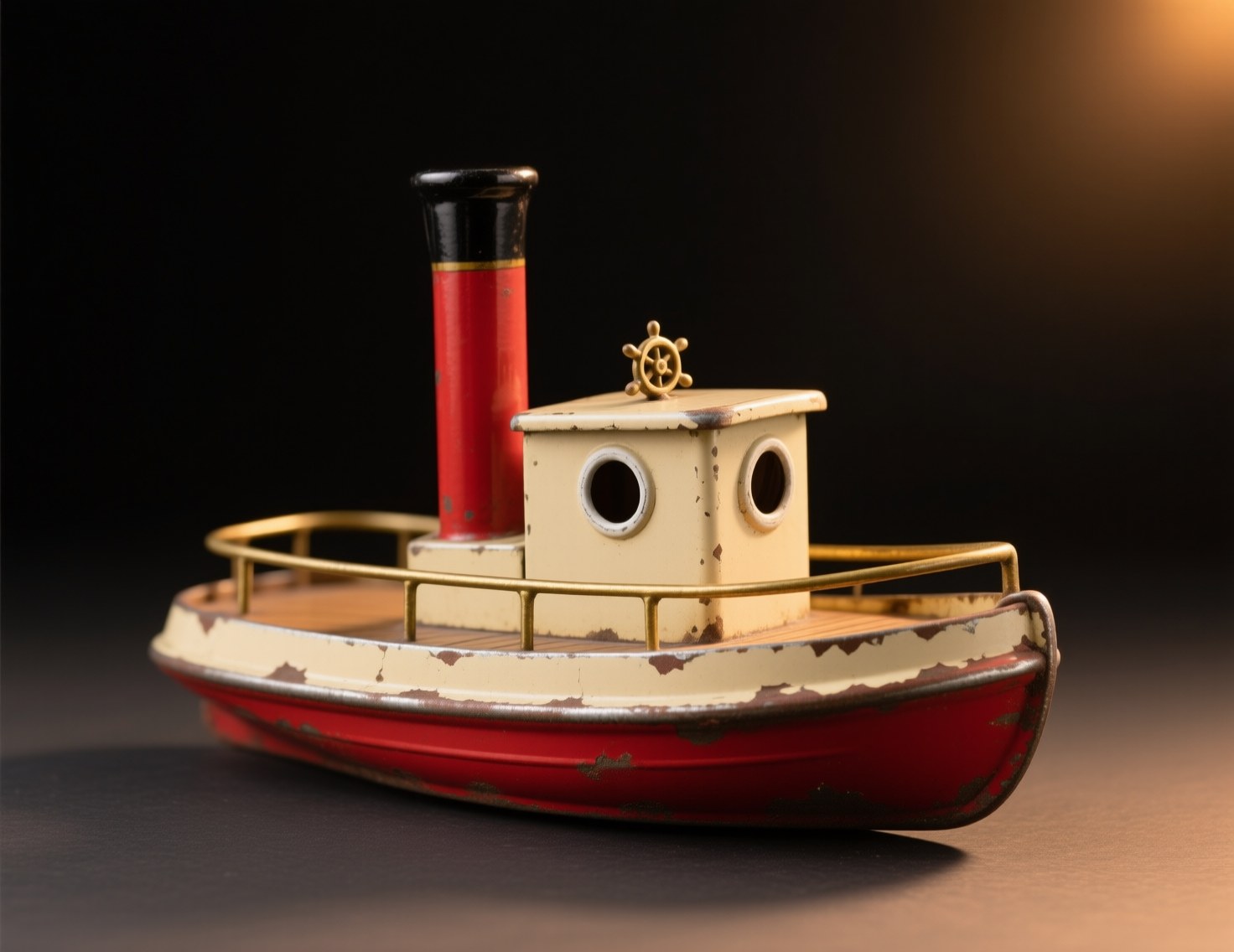
Selling Märklin Toy Boats and Ocean Liners
Märklin's hand-painted tinplate ships of about 1900 to 1930, from ocean liners and battleships to paddle steamers and torpedo boats, are valued on original paint, intact rigging, size, and which model and series they are.
How we buy Märklin Toy Boats and Ocean Liners
Every Märklin Toy Boats and Ocean Liners piece is researched by hand, graded straight, and priced against real eBay sold comps. We’d rather quote you a number you can check than a number you have to take on faith.
The era collectors care about: 1900-1930, tinplate clockwork, spirit-fired and live-steam ships and boats from Göppingen, Germany. Two pieces that look the same to most buyers can be worlds apart in value. Here’s what we check before we put a number on anything:
Original factory paint, because an unrestored boat with honest wear is judged very differently from one that has been repainted, and collectors look at the hull, deck and lifeboats closely
Intact masts, rails, funnels, flags and lifeboats, since these thin parts break or go missing, and even top boats are catalogued with any replaced pieces noted
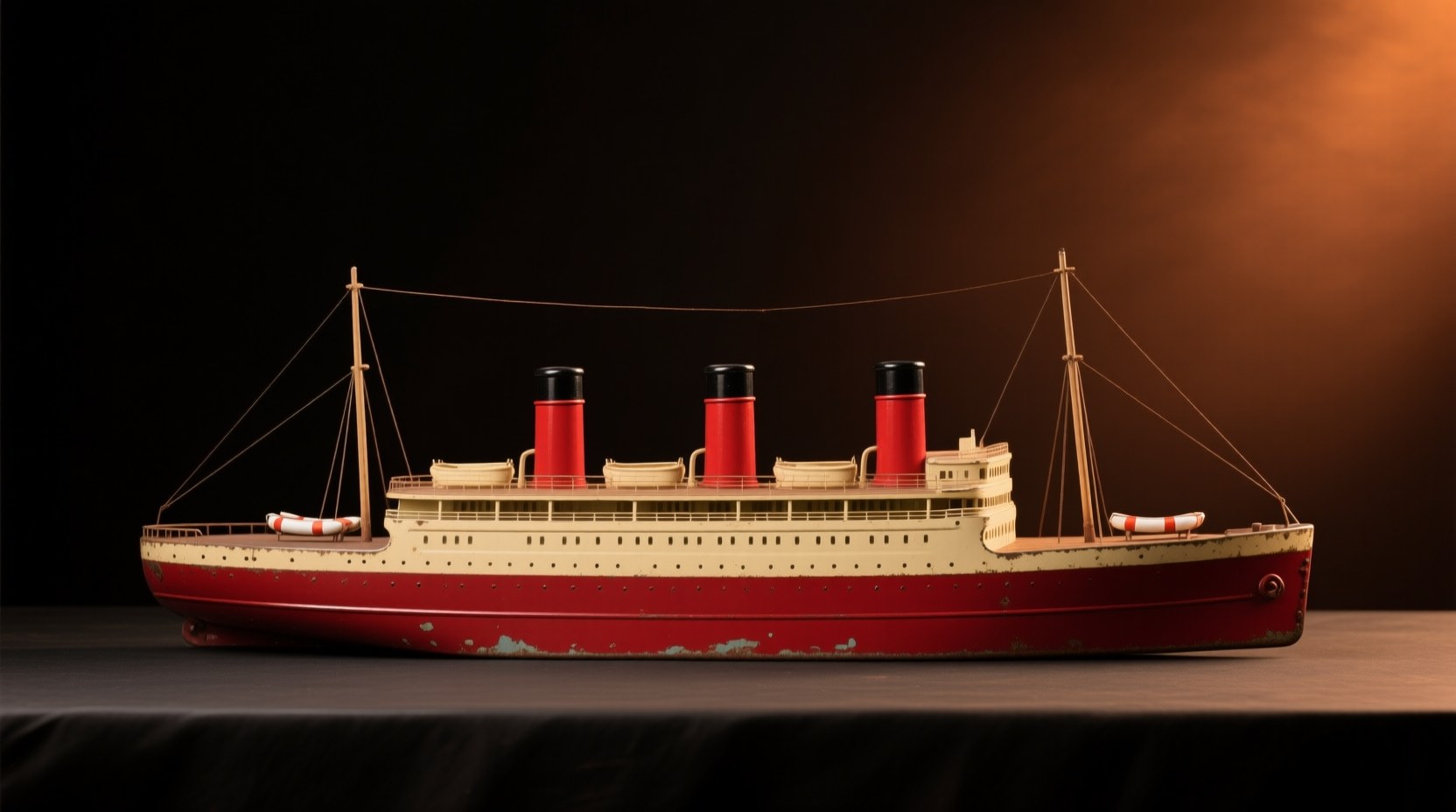
The type and size of the model, because large, detailed ocean liners and battleships, often 30 inches or more in length, are catalogued separately from torpedo boats and paddle steamers, and each type has its own buyers
The model series and date, since auction houses catalogue boats as Series I or Series II, and the version and period affect which collectors want it
Power and mechanism, because clockwork, spirit-fired and live-steam boats are different pieces, and an original boiler, burner or spring is part of what a collector checks
Identify
Look for the maker's mark and any catalogue number, then compare them with Märklin catalogue references. Boats came in different types and sizes, so match yours to a documented model.
Check which series and period the boat belongs to. Auction houses date the Maine to about 1902 as Series I, and the Brooklyn to about 1912-15 as Series II, so hull style and size help place yours.
Identify the power source. Clockwork boats are key-wound, while live-steam boats have a boiler with a cap and steam valve, and some boats were spirit-fired. Note whether the boiler fittings look original.
Check masts, flags, pennants, lifeboats and rails for replacements. Even a very fine boat can be catalogued with a few small replacement parts, so look for different paint colour or a seam where a part was added.
A few of the Märklin Toy Boats and Ocean Liners pieces we research and buy — though we identify and price everything you send, common and scarce alike:
Snapshots of your Märklin Toy Boats and Ocean Liners pieces — the whole boat from both sides and above, the maker's stamp, boiler or winding key, rigging, lifeboats, and every chip, repair or replaced part. The line and rough condition is plenty to start.
Each piece gets identified by hand, graded straight, and priced against actual Märklin Toy Boats and Ocean Liners sold listings — the real sales behind the number.
Take the offer and get paid, collector to collector — or hold onto your Märklin Toy Boats and Ocean Liners. No fees, no pressure, no obligation either way.

Tell us what you’ve got. A real collector reads every message, researches each Märklin Toy Boats and Ocean Liners piece against real sold comps, and gets back to you — usually within a day. No obligation.
Every number is anchored to real eBay sold listings - what Märklin Toy Boats and Ocean Liners pieces in the same condition have actually sold for recently, not active asking prices or an estimate tool. We identify exactly what you have first (1900-1930, tinplate clockwork, spirit-fired and live-steam ships and boats from Göppingen, Germany), then pull the comps that match.
Original factory paint, because an unrestored boat with honest wear is judged very differently from one that has been repainted, and collectors look at the hull, deck and lifeboats closely. Intact masts, rails, funnels, flags and lifeboats, since these thin parts break or go missing, and even top boats are catalogued with any replaced pieces noted. We check each of these by hand before we quote, so the offer reflects what your specific pieces are - not a blanket price for the line.
No obligation, ever. Send photos and we'll research each piece and give you an honest, sold-comp-backed read. If you decide to hold, that's completely fine - no pressure, no list-selling.
Both. We'll take a collection as a whole or cherry-pick the standout pieces - whichever gets you the best outcome. Either way every item is identified and priced on its own merits, including the common ones.
It can be, because Märklin's large hand-painted tinplate ships have set records at specialist auctions. A boat's value depends on its size, model, original paint and whether rigging and fittings are intact. A small or heavily damaged boat is a very different case from a complete liner, so it needs a by-hand appraisal.
Yes. Collectors prefer pieces that are original and unrestored, and auction catalogues list replaced flags, masts and other fittings even on top boats. A repaint or re-rig does not make a boat worthless, but it changes how the piece is valued, so tell us everything you know about its history.
No. Leave the paint, rigging and boiler exactly as they are. A boat found in an attic can be prized for its original paint, and well-meant touch-ups, cleaning with the wrong materials or replacing parts can remove what collectors value most. Photograph it as found, keep any broken pieces, and let a specialist advise on conservation.
Researching a different line? See everything we buy.