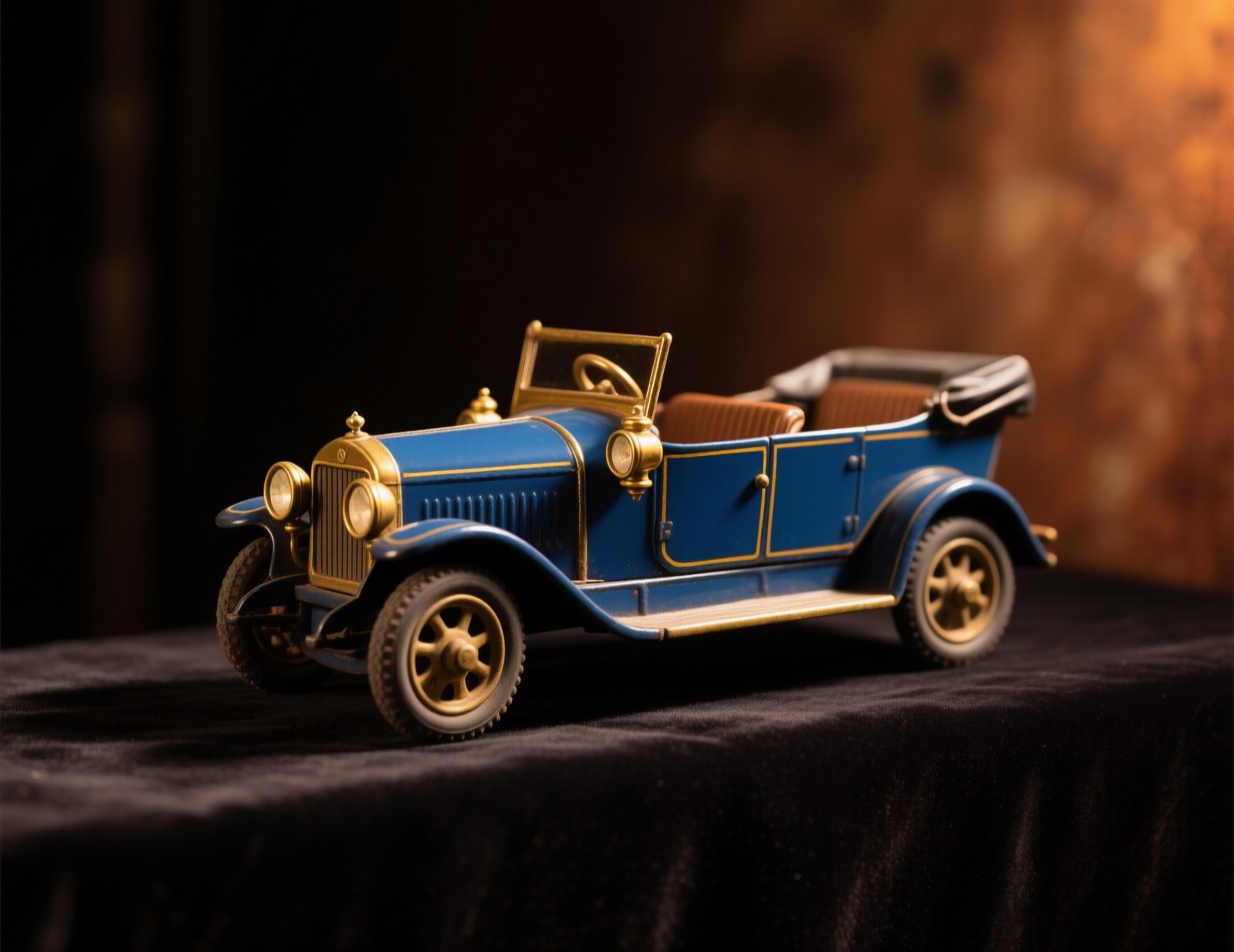
Märklin Tinplate Cars, Fire Engines and Carousels Value Guide
Märklin's hand-painted tinplate automobiles, horse-drawn fire pumpers and musical carousels of the 1890s to 1910s are valued on original paint, working mechanisms, completeness, and how large and elaborate the piece is.
How we set the number
Every Märklin Tinplate Cars, Fire Engines and Carousels value we quote is anchored to actual eBay sold listings — the exact prices matching pieces closed at, in matching condition. Active asking prices are wish prices; an automated estimate is a shrug. We start from what people genuinely paid, then adjust for the specifics of your piece.
The era collectors care about: 1890s-1910s hand-painted tinplate road vehicles, fire engines, carousels and other novelties from Göppingen, Germany. These are the factors that separate a common piece from a genuine find — and the things to look at before you trust any number:
Original hand-painted finish, because factory paint with honest wear is valued differently from a repaint, and early restoration on these toys can be hard to spot
Completeness of the whole piece, such as the horse with a fire pumper, the canopy, railings and figures on a carousel, and the headlamps and rubber tyres on a car
Working mechanism, whether clockwork, steam-driven or a musical comb, since a carousel whose mechanism does not engage or a car with a broken drive is catalogued as such
Size and detail, because the larger, more elaborate pieces with opening doors, working steering, ornate railings and lamp bulbs are the features catalogue descriptions single out
The model and its date against Märklin's catalogues, since a catalogued model and a transitional or reproduced piece are not the same thing, and a carousel of 1908 design has been reproduced by Märklin itself
Some of the Märklin Tinplate Cars, Fire Engines and Carousels pieces whose values come up most often — though every piece is worth identifying, because the value lives in the details:
The #1 mistake on Märklin Tinplate Cars, Fire Engines and Carousels: pricing off a high active listing instead of a real sold one, and assuming condition is better than it is. A clean grade against the sold comps is the difference between a number that holds and a number that disappoints.
History
Märklin of Göppingen, Germany, was founded in 1859 by Theodor Friedrich Wilhelm Märklin. It made a wide range of metal toys, including clockwork-driven automobiles, and its output included hand-painted tinplate horse-drawn fire pumpers and musical carousels alongside its trains and boats. A windup landaulet car was made around 1909. A carousel made by the company in 1911 is held by the Children's Museum of Indianapolis, and Märklin's 1908 carousel is known as model 8847. Carousels were driven in different ways: one c. 1910 example is clockwork with a musical comb, while another was described as crank or steam driven. Production was forced to switch to wartime articles in the First World War. Original Märklin fire trucks and carousels come up at auction, where hand finish, scale and moving parts matter.
Identify
Compare the piece with Märklin's catalogued models. A c. 1909 landaulet, for instance, was described by a dealer as having working steering, opening doors and four nickelled headlamps.
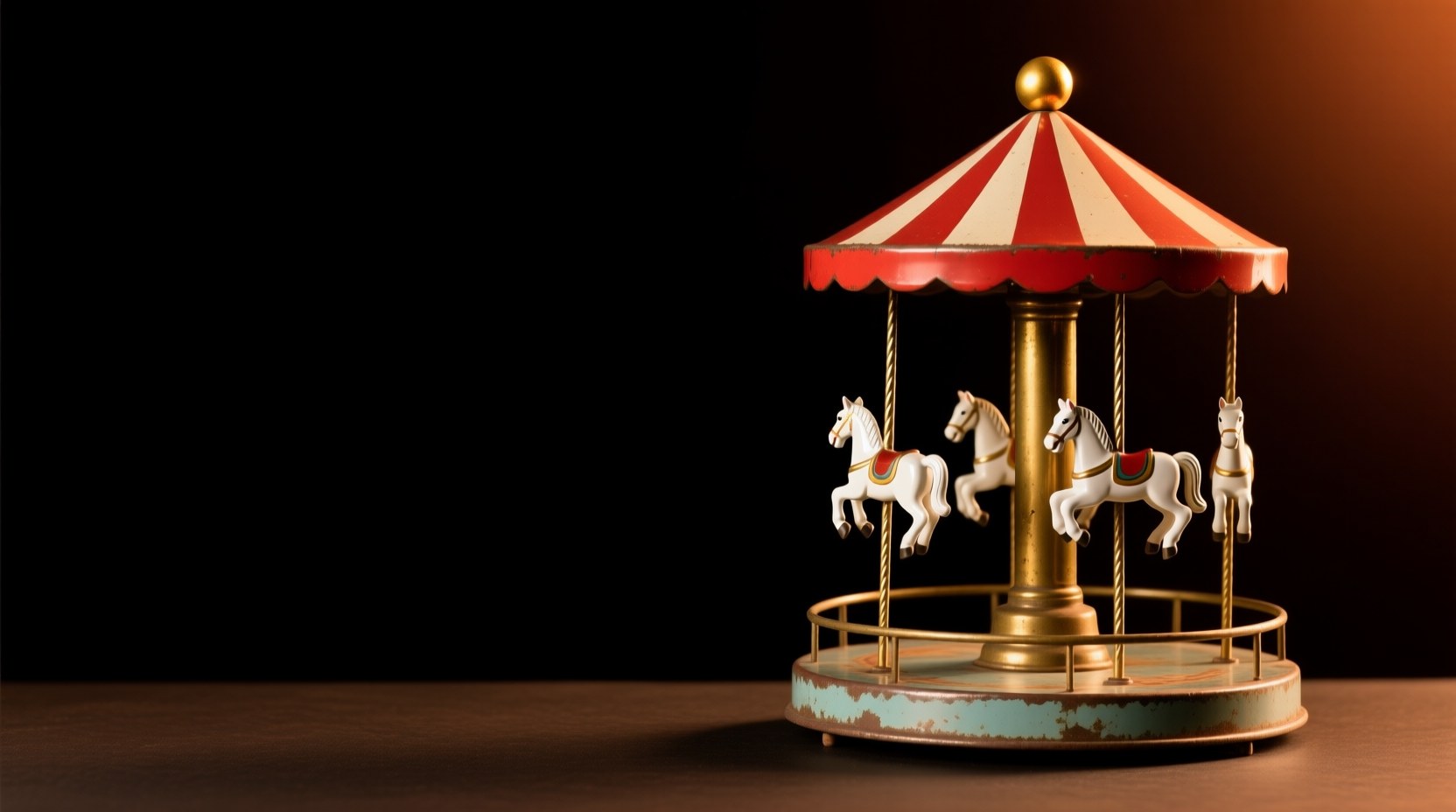
Look at the mechanism. A c. 1910 carousel can have an internal clockwork drive, a musical comb in a hinged box and a hand-crank musical wheel in the base, grooved so it can attach to a steam toy as an accessory.
Check the finish and fittings. A c. 1909 car is described with hand pinstriping, and a fire pumper of about 1895 with a nickel-plated pump handle, copper pump, side lamps, railings and painted cast wheels.
Note what is missing or replaced. A canopy, tassel border, figure or horse that survives is part of the value, and a torn canopy, paint loss or a mechanism that does not engage is written into catalogue descriptions.
Märklin issued its own reproduction of the 1908 model 8847 carousel as article 16121, in a limited edition of 2000, so a carousel of that design needs checking against the maker's later edition.
Other firms have made reproductions and spare parts for Märklin toys. Reproductions from Ritter, HEHR and Selzer are marked and sold as such, but some producers do not mark theirs and offer them as originals.
Collectors are advised to watch for restoration, reproductions and fakes. One c. 1909 Märklin landaulet was described by the dealer as partly restored, with the blue paint suspected to have been repainted and then aged, so ask for any restoration to be disclosed.
Grab the checklist to run a first pass yourself, then send your Märklin Tinplate Cars, Fire Engines and Carousels over for a free, no-obligation appraisal — researched by hand and priced against real sold comps.
The same hand-research walk-through we use on every Märklin Tinplate Cars, Fire Engines and Carousels piece - boiled down to a checklist you can run yourself. Stop guessing and start with a number you can actually defend.

Send photos and we’ll do the research — identify each Märklin Tinplate Cars, Fire Engines and Carousels piece, pull the matching sold comps, and give you an honest number with the receipts behind it. Free, and no obligation to sell.
By real eBay sold listings - the prices Märklin Tinplate Cars, Fire Engines and Carousels pieces in matching condition have actually closed at recently, not active asking prices and not an automated estimate. An asking price is a wish; a sold price is a receipt. We start every appraisal from the sold comps.
Original hand-painted finish, because factory paint with honest wear is valued differently from a repaint, and early restoration on these toys can be hard to spot. Completeness of the whole piece, such as the horse with a fire pumper, the canopy, railings and figures on a carousel, and the headlamps and rubber tyres on a car. Two pieces that look identical to a casual buyer can sit at very different numbers once you account for these, which is exactly why a by-hand read beats a price-guide average.
Yes - more than almost anything else. Working mechanism, whether clockwork, steam-driven or a musical comb, since a carousel whose mechanism does not engage or a car with a broken drive is catalogued as such. We grade against pristine, not against the last beat-up copy we saw, and when it's a close call we grade down. The honest grade is what keeps the number defensible.
Yes, and it's free with no obligation. Send photos and we'll identify each piece (1890s-1910s hand-painted tinplate road vehicles, fire engines, carousels and other novelties from Göppingen, Germany), pull the matching sold comps, and give you a number with the receipts behind it. Grab the appraisal checklist below to do a first pass yourself, or send it over and we'll do the research.
Märklin's hand-painted carousels and fire pumpers draw serious bidding at specialist auctions: a Märklin carousel was the top lot of a 400-lot Bertoia sale in December 2025. A great deal depends on size, original paint, completeness and whether the mechanism works. A small or incomplete piece is a different matter, so it needs a by-hand appraisal against real sold comparables.
Märklin made a limited reproduction of its 1908 model 8847 carousel as article 16121, and other firms made reproductions and parts, some marked and some not. Look at the construction, paint and mechanism, and check any markings or paperwork. If you are unsure, send photographs of the base, canopy, figures and mechanism and we will compare them with catalogued examples.
Yes. Catalogues describe a fire pumper as presented without its horse and a carousel by its canopy, figures and paint loss. Original canopies and authentic figures are praised when they survive, and what is missing, replaced or damaged is recorded piece by piece. Keep any loose parts together and photograph the piece as you found it.
Looking at a different line? Browse all value guides.