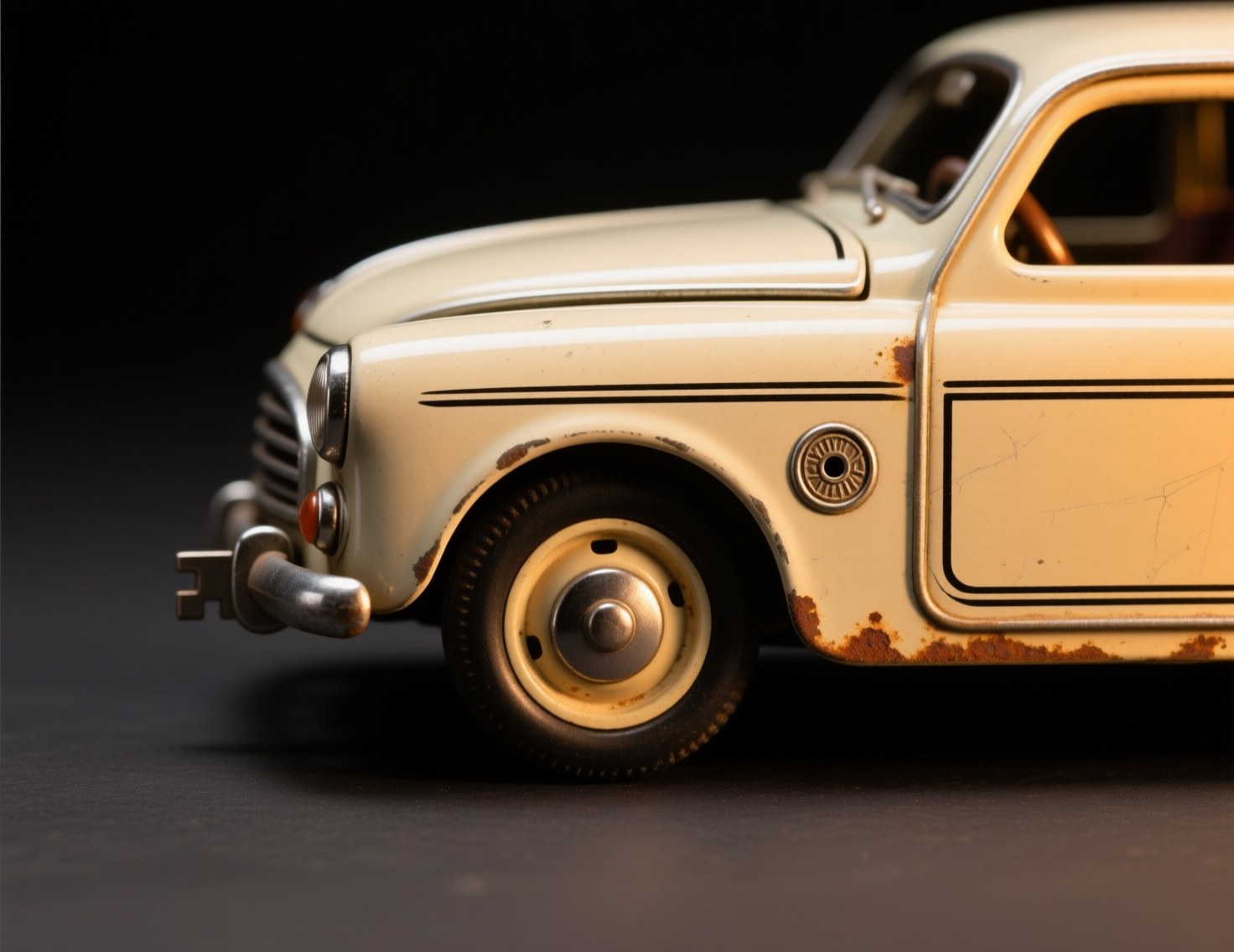
Lehmann Tin Wind-Up Toys Value Guide
Ernst Paul Lehmann's Brandenburg factory made colorfully lithographed tin clockwork toys from 1881 into the early 1950s, famous for inventive mechanisms, with value resting on condition, the original box, a working mechanism, and the maker's logo or name
How we set the number
Every Lehmann Tin Wind-Up Toys value we quote is anchored to actual eBay sold listings — the exact prices matching pieces closed at, in matching condition. Active asking prices are wish prices; an automated estimate is a shrug. We start from what people genuinely paid, then adjust for the specifics of your piece.
The era collectors care about: 1881-1950s German lithographed tin novelty toys. These are the factors that separate a common piece from a genuine find — and the things to look at before you trust any number:
The specific model and its mechanism, since an intricate multi-figure toy such as the Boxer Rebellion, built around a complicated clockwork beneath its tinplate stand and made in very few numbers, trades in a different league than a common single-action walker
Lithography condition, because Lehmann's toys were lithographed with detailed graphics and vivid colors, and bright, unfaded, unrusted litho with sharp printed lines is worth more than a toy with flaking or rust
A working clockwork motor and complete moving parts, since Lehmann toys have an action such as dancing, climbing, walking or rolling, and a toy that still performs its action with every original part present outsells one that no longer moves
The maker's mark and model name, since most Lehmann toys are marked with a logo or an embossed name, which helps separate a genuine Lehmann piece from the unmarked or mismarked tin toys on the market
Original box and paper parts, since Lehmann marketed its toys in boxes with instructions in German and English, and a complete original box lifts a toy's value above a loose example
Some of the Lehmann Tin Wind-Up Toys pieces whose values come up most often — though every piece is worth identifying, because the value lives in the details:
The #1 mistake on Lehmann Tin Wind-Up Toys: pricing off a high active listing instead of a real sold one, and assuming condition is better than it is. A clean grade against the sold comps is the difference between a number that holds and a number that disappoints.
History
Ernst Paul Lehmann founded his tin toy factory in Brandenburg an der Havel, Germany, on September 1, 1881, with Jean Eichner as partner, and ran it alone after Eichner died in 1884. The firm specialised in clockwork tin plate toys with inventive mechanisms and witty names, and its mechanical tin toys were protected by international patents. The factory averaged 600 to 800 employees, mostly women, and exported up to 90 percent of its production before World War One, to America, China and Australia. Its toys included cars such as the Tut-Tut and the Oho, which steered an erratic course when wound, animals such as the Balky Mule, and the multi-figure Boxer Rebellion toy. Ernst Paul Lehmann died in 1934, and the family firm was expropriated in 1948 and continued as VEB Mechanische Spielwaren Brandenburg. Lehmann's heirs restarted in Nuremberg from 1950 under the Ernst Paul Lehmann Patentwerk name, which has made the LGB garden railway since 1968.
Identify
Look for Lehmann's logo or embossed name. Most Lehmann toys are marked either with a logo or with the toy's name embossed on the piece, and every Lehmann tin toy has a name such as Balky Mule, Tut Tut or Paak-Pak.
Check the lithography itself rather than painted color. Lehmann's tin toys were lithographed with detailed graphics and vivid colors, so the color sits on the surface as a crisp printed pattern, not a hand-brushed finish.
Wind the clockwork gently and watch the action. Lehmann toys are known for clever actions such as dancing, climbing, walking, crawling and rolling, so the toy should perform the action its name promises.
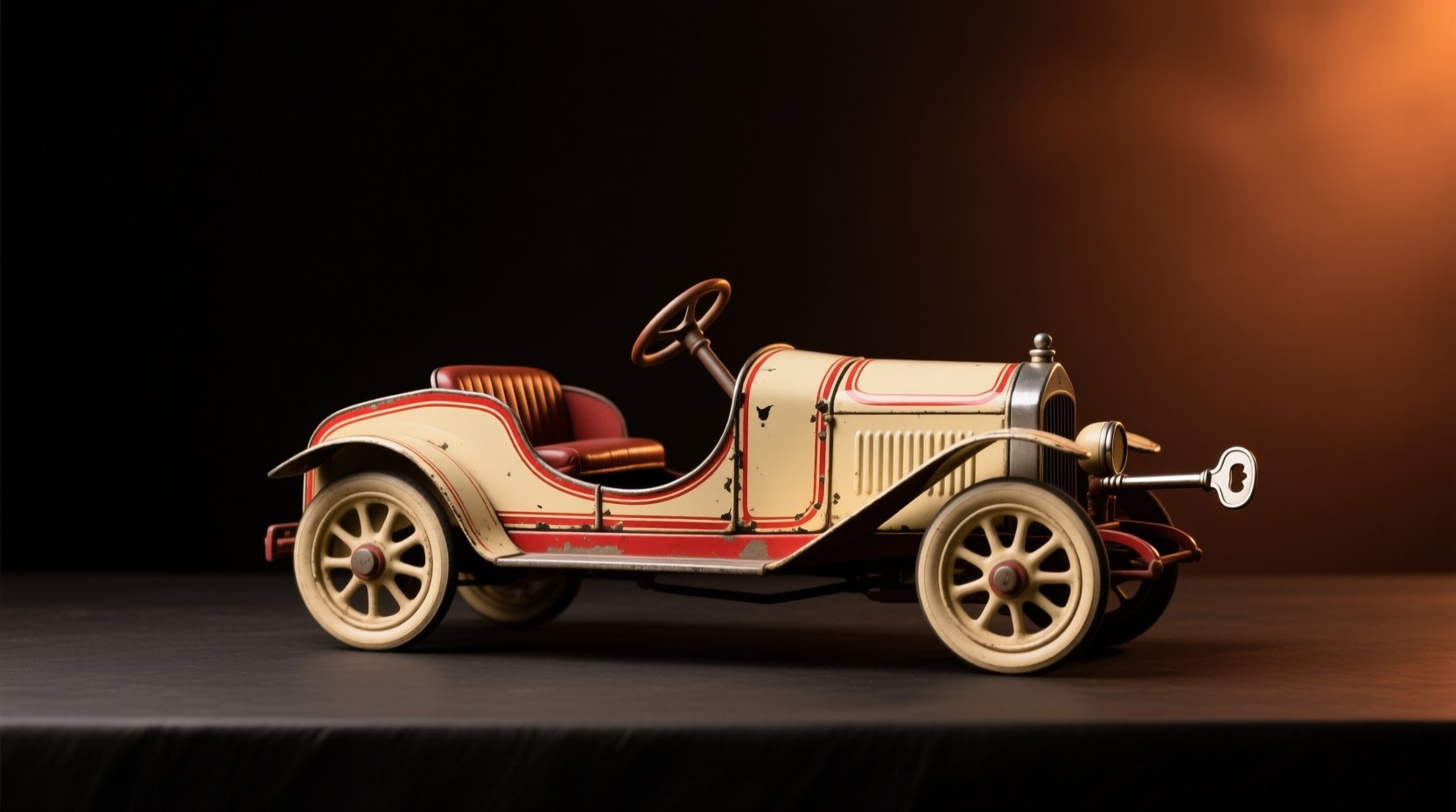
Check the winding key. On the Tut-Tut and Oho cars the clockwork is wound by a key in the side panel of the car, so a missing key or a different winding point is worth a second look.
Fakes marked Lehmann have been seen, so a toy should be judged on its lithography, the construction of its moving parts, and its mechanism together, not the mark alone.
Dealers note that models made after 1948, when the company had been occupied by the Russians after the war, typically lack the same quality and collector interest, so a toy with an obviously late finish, modern fasteners, or low printing quality is not a prewar original.
Grab the checklist to run a first pass yourself, then send your Lehmann Tin Wind-Up Toys over for a free, no-obligation appraisal — researched by hand and priced against real sold comps.
The same hand-research walk-through we use on every Lehmann Tin Wind-Up Toys piece - boiled down to a checklist you can run yourself. Stop guessing and start with a number you can actually defend.

Send photos and we’ll do the research — identify each Lehmann Tin Wind-Up Toys piece, pull the matching sold comps, and give you an honest number with the receipts behind it. Free, and no obligation to sell.
By real eBay sold listings - the prices Lehmann Tin Wind-Up Toys pieces in matching condition have actually closed at recently, not active asking prices and not an automated estimate. An asking price is a wish; a sold price is a receipt. We start every appraisal from the sold comps.
The specific model and its mechanism, since an intricate multi-figure toy such as the Boxer Rebellion, built around a complicated clockwork beneath its tinplate stand and made in very few numbers, trades in a different league than a common single-action walker. Lithography condition, because Lehmann's toys were lithographed with detailed graphics and vivid colors, and bright, unfaded, unrusted litho with sharp printed lines is worth more than a toy with flaking or rust. Two pieces that look identical to a casual buyer can sit at very different numbers once you account for these, which is exactly why a by-hand read beats a price-guide average.
Yes - more than almost anything else. A working clockwork motor and complete moving parts, since Lehmann toys have an action such as dancing, climbing, walking or rolling, and a toy that still performs its action with every original part present outsells one that no longer moves. We grade against pristine, not against the last beat-up copy we saw, and when it's a close call we grade down. The honest grade is what keeps the number defensible.
Yes, and it's free with no obligation. Send photos and we'll identify each piece (1881-1950s German lithographed tin novelty toys), pull the matching sold comps, and give you a number with the receipts behind it. Grab the appraisal checklist below to do a first pass yourself, or send it over and we'll do the research.
Look for the Lehmann logo or the toy's name embossed on the piece, check that the color is printed lithography rather than hand paint, and wind the mechanism to see that it performs the specific action that model is known for. Those three things together are stronger evidence than the mark alone, since fakes marked Lehmann have been seen.
A working clockwork motor helps and is worth describing honestly, but it is not the only thing collectors weigh. A Lehmann toy with crisp, unfaded lithography and complete original parts can still be desirable even if it no longer runs, while a toy with a replaced spring or other repairs may run again but is usually worth less for the repair.
Yes, generally. Lehmann marketed its toys in boxes with instructions in both German and English, and dealers note that price is highly correlated to condition and to having the original box. Keep the box even if it is worn, and photograph it alongside the toy rather than separately.
Looking at a different line? Browse all value guides.