Cast Iron Toy Vehicles (Arcade, Hubley, Kenton) Value Guide

Cast Iron Toy Vehicles (Arcade, Hubley, Kenton) Value Guide — What’s It Worth?

American cast iron toy vehicles made by Arcade, Hubley, Kenton and Dent from the 1900s through the 1940s, valued on maker, model, original paint, completeness, and whether a piece is a later casting or repaint.

How we set the number

Prices with a receipt, not a guess

Every Cast Iron Toy Vehicles (Arcade, Hubley, Kenton) value we quote is anchored to actual eBay sold listings — the exact prices matching pieces closed at, in matching condition. Active asking prices are wish prices; an automated estimate is a shrug. We start from what people genuinely paid, then adjust for the specifics of your piece.

What drives Cast Iron Toy Vehicles (Arcade, Hubley, Kenton) value

The era collectors care about: 1900s-1940s American cast iron cars, trucks, buses and cycles. These are the factors that separate a common piece from a genuine find — and the things to look at before you trust any number:

  1. 1

    The maker and model, because a large, detailed Arcade, Hubley, Kenton or Dent vehicle in a desirable body style, such as a fire truck or motorcycle, is sought after far more than a small, common car

  2. 2

    Original paint and finish, since old cast iron was hand painted or dipped, and paint that has aged, chipped and worn in a natural way tells the truth about the toy, while a bright, even repaint does not

  3. 3

    Completeness of wheels, drivers, decals and small cast parts, because figures, riders, ladders, hitches and other add-on pieces were easily broken or lost and a less complete toy sells for less

  4. 4

    Casting and surface detail, since seams, surface texture and hardware that fit the period help separate an original from a later casting, though no single test settles it and each toy should be compared with a documented example

  5. 5

    Whether the toy is a documented original or a reproduction, because reproductions are generally based on vintage designs with small differences, and an undocumented piece with no history should be checked carefully before it is treated as original

Cast Iron Toy Vehicles (Arcade, Hubley, Kenton) — the details decide the price

Cast Iron Toy Vehicles (Arcade, Hubley, Kenton) pieces collectors ask about

Some of the Cast Iron Toy Vehicles (Arcade, Hubley, Kenton) pieces whose values come up most often — though every piece is worth identifying, because the value lives in the details:

  • Hubley Old Dutch Cleanser girl cast iron pull toy
  • Arcade cast iron Yellow Cab
  • Arcade McCormick-Deering cast iron thresher
  • Hubley cast iron motorcycle with sidecar
  • Kenton steam pumper fire wagon
  • Dent cast iron hook-and-ladder fire truck

The #1 mistake on Cast Iron Toy Vehicles (Arcade, Hubley, Kenton): pricing off a high active listing instead of a real sold one, and assuming condition is better than it is. A clean grade against the sold comps is the difference between a number that holds and a number that disappoints.

History

A short history of Cast Iron Toy Vehicles (Arcade, Hubley, Kenton)

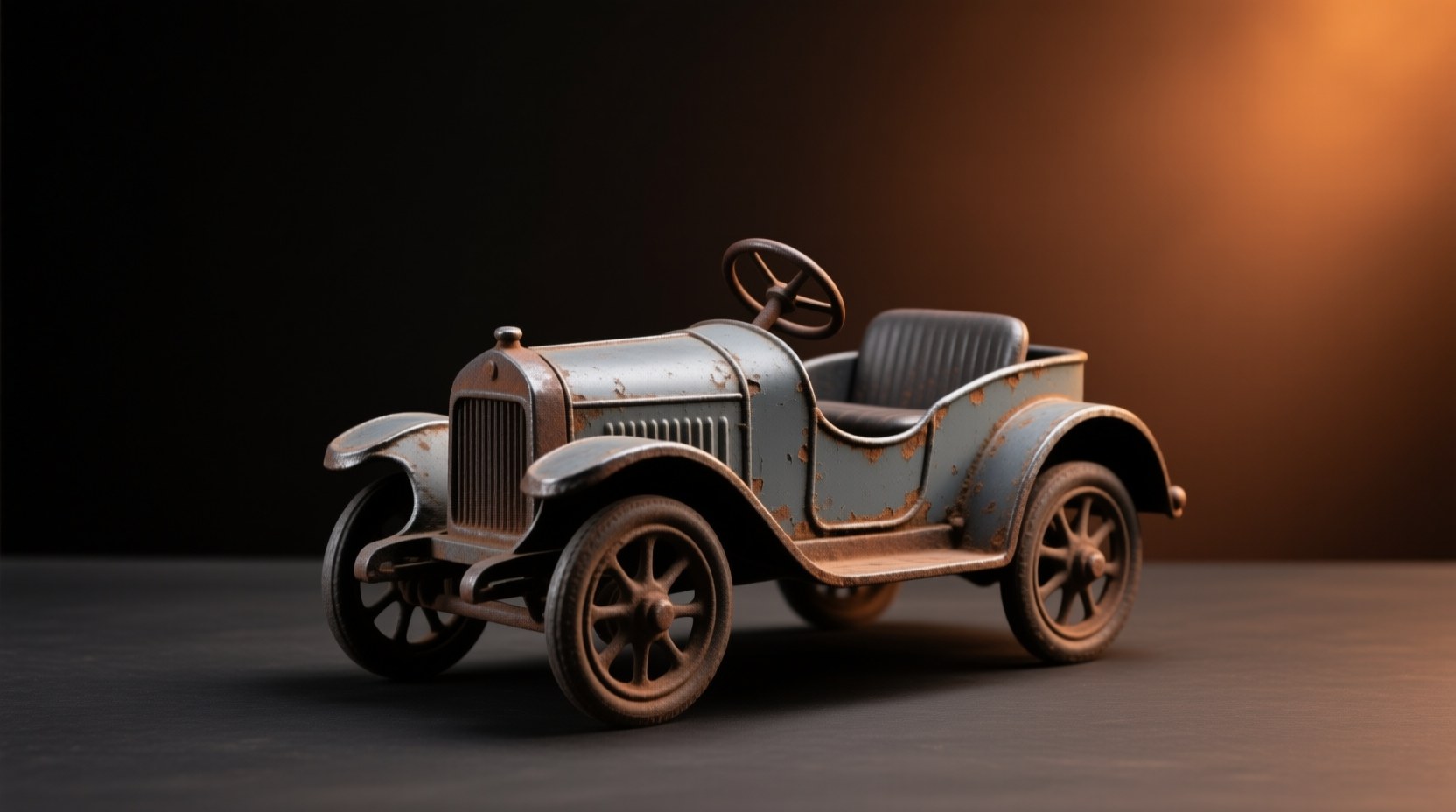
Cast iron toy vehicles were made by a number of American firms from the 1890s into the 1940s. Arcade Manufacturing of Freeport, Illinois, Hubley Manufacturing of Lancaster, Pennsylvania, and the Dent Hardware Company of Fullerton, Pennsylvania, were among the most popular makers, along with Kenton Hardware of Kenton, Ohio, which made fire engines, circus wagons and carriages and was a center of American cast iron production from the 1890s to the 1950s. Kenton cast its parts in molds, assembled them with rivets or bolts, and hand painted or dipped the toys in bright colors. Arcade began making farm toys in 1922 with a Fordson tractor and added McCormick-Deering threshers in 1925. Hubley was incorporated in 1894 and its first toys appeared in 1909, including many motorcycles that often had sidecars. Dent made cast iron and aluminum transportation toys, with its fire trucks and large hook-and-ladder toys popular. Cast iron toy production peaked from shortly before 1900 until the 1940s, when lighter-weight models that were less expensive to produce and transport superseded it.
Identify

How to identify genuine Cast Iron Toy Vehicles (Arcade, Hubley, Kenton)

  1. 1

    Look for a cast or raised maker's mark, such as 'Arcade,' 'Hubley,' 'Kenton' or 'Dent'; many original toys carry logos, names or numbers, but many were never marked and are identified instead by body style and casting details, sometimes with the help of company catalogs.

  2. 2

    Check the seams where mold halves meet and the texture of the surface, and compare them with a documented original of the same toy; sources disagree on which tells separate originals from reproductions, so do not rely on seams alone.

  3. 3

    Look at the hardware. Original cast iron toys were assembled with rivets or bolts, and a Phillips-head screw or a modern fastener on a toy claimed to predate 1940 is a sign of a repair or a later piece.

  4. 4

    Judge the paint. Original vintage paint often shows wear, fading or chipping over time, while paint that is more vibrant and uniform and lacks natural wear is more likely a repaint or a reproduction.

Reproductions, reissues and fakes to watch for

Reproduction cast iron toys exist and are generally based on vintage designs, with slight differences in scale, proportions or detailing; compare a toy against documented examples before trusting it, especially one with no history.

Repainting is a risk on played-with toys. A well-researched repaint can still be collectible but is valued below an original-paint example, so ask whether a toy's finish is original before assuming it is.

Married or assembled toys, built from parts of more than one casting or with replaced wheels, drivers or accessories, can turn up; compare the proportions, paint and wear across all the parts for consistency before trusting a toy as complete and original.

Free appraisal

Get a real number on your Cast Iron Toy Vehicles (Arcade, Hubley, Kenton)

Grab the checklist to run a first pass yourself, then send your Cast Iron Toy Vehicles (Arcade, Hubley, Kenton) over for a free, no-obligation appraisal — researched by hand and priced against real sold comps.

Free guide

What's My Cast Iron Toy Vehicles (Arcade, Hubley, Kenton) Worth?

The same hand-research walk-through we use on every Cast Iron Toy Vehicles (Arcade, Hubley, Kenton) piece - boiled down to a checklist you can run yourself. Stop guessing and start with a number you can actually defend.

  • Pin down the exact Cast Iron Toy Vehicles (Arcade, Hubley, Kenton) piece - line, variant, and year
  • Grade condition honestly (and dodge the #1 overpricing mistake)
  • Pull real sold comps instead of wishful asking prices
  • Set a number with a receipt behind it

Tell us where to send it and it’s yours — instantly.

Free, instant, and no spam — just the guide.

Want us to value your Cast Iron Toy Vehicles (Arcade, Hubley, Kenton)?

Send photos and we’ll do the research — identify each Cast Iron Toy Vehicles (Arcade, Hubley, Kenton) piece, pull the matching sold comps, and give you an honest number with the receipts behind it. Free, and no obligation to sell.

  • Anchored to real eBay sold comps
  • Graded straight, every flaw disclosed
  • Free, with no obligation

Appraise my Cast Iron Toy Vehicles (Arcade, Hubley, Kenton)

Tell us what you have. Photos help us pull the right comps.

No spam, no list-selling. Just a real reply from a collector.

Cast Iron Toy Vehicles (Arcade, Hubley, Kenton) values — straight answers

How is Cast Iron Toy Vehicles (Arcade, Hubley, Kenton) value actually determined?+

By real eBay sold listings - the prices Cast Iron Toy Vehicles (Arcade, Hubley, Kenton) pieces in matching condition have actually closed at recently, not active asking prices and not an automated estimate. An asking price is a wish; a sold price is a receipt. We start every appraisal from the sold comps.

What makes one Cast Iron Toy Vehicles (Arcade, Hubley, Kenton) piece worth far more than another?+

The maker and model, because a large, detailed Arcade, Hubley, Kenton or Dent vehicle in a desirable body style, such as a fire truck or motorcycle, is sought after far more than a small, common car. Original paint and finish, since old cast iron was hand painted or dipped, and paint that has aged, chipped and worn in a natural way tells the truth about the toy, while a bright, even repaint does not. Two pieces that look identical to a casual buyer can sit at very different numbers once you account for these, which is exactly why a by-hand read beats a price-guide average.

Does condition really change Cast Iron Toy Vehicles (Arcade, Hubley, Kenton) values that much?+

Yes - more than almost anything else. Completeness of wheels, drivers, decals and small cast parts, because figures, riders, ladders, hitches and other add-on pieces were easily broken or lost and a less complete toy sells for less. We grade against pristine, not against the last beat-up copy we saw, and when it's a close call we grade down. The honest grade is what keeps the number defensible.

Can I get a real Cast Iron Toy Vehicles (Arcade, Hubley, Kenton) appraisal, not just a guide?+

Yes, and it's free with no obligation. Send photos and we'll identify each piece (1900s-1940s American cast iron cars, trucks, buses and cycles), pull the matching sold comps, and give you a number with the receipts behind it. Grab the appraisal checklist below to do a first pass yourself, or send it over and we'll do the research.

How do I know if my cast iron toy truck is original and not a reproduction?+

Look at the seams, the surface texture and the hardware, and compare them with a documented example of the same toy. Reproductions are generally based on vintage designs, so small differences in scale, proportions and detailing matter, and a Phillips-head screw on a toy said to predate the 1940s is a warning sign. Photograph the underside, the seams and any maker's mark, and send them in for a proper look.

Does repainting hurt the value of an old cast iron toy?+

Yes, in most cases. Collectors pay the most for a toy in its original paint, even when that paint is worn, chipped or faded, because it tells the truth about the toy's age and use. A repaint, even a careful one, is valued well below an original-paint example of the same toy, so leave the finish alone and photograph it exactly as it is.

Are all old Arcade, Hubley, Kenton and Dent toys valuable?+

No. Small, common cars turn up often, while larger, more detailed pieces, advertising toys, motorcycles and fire trucks in good original condition and with their small parts intact are the ones collectors seek. Maker, model, completeness and original paint all matter, so photograph the whole toy, any marks, and every small part before it is assessed.

Looking at a different line? Browse all value guides.

More value guides

Antique Mechanical Banks1869-1928, with 1940s-1950s reproductions as a separate problemMärklin Toy Boats and Ocean Liners1900-1930, tinplate clockwork, spirit-fired and live-steam ships and boats from Göppingen, GermanyMärklin Tinplate Cars, Fire Engines and Carousels1890s-1910s hand-painted tinplate road vehicles, fire engines, carousels and other novelties from Göppingen, GermanyLehmann Tin Wind-Up Toys1881-1950s German lithographed tin novelty toysJapanese Tin Robots1950s-1960s, with a few earlier clockwork robots and later reissues as separate marketsMärklin Tinplate Trains1891-1930s prewar Gauge 1, 2 and 3 clockwork and live steam; the 1969 Gauge 1 revival is separate